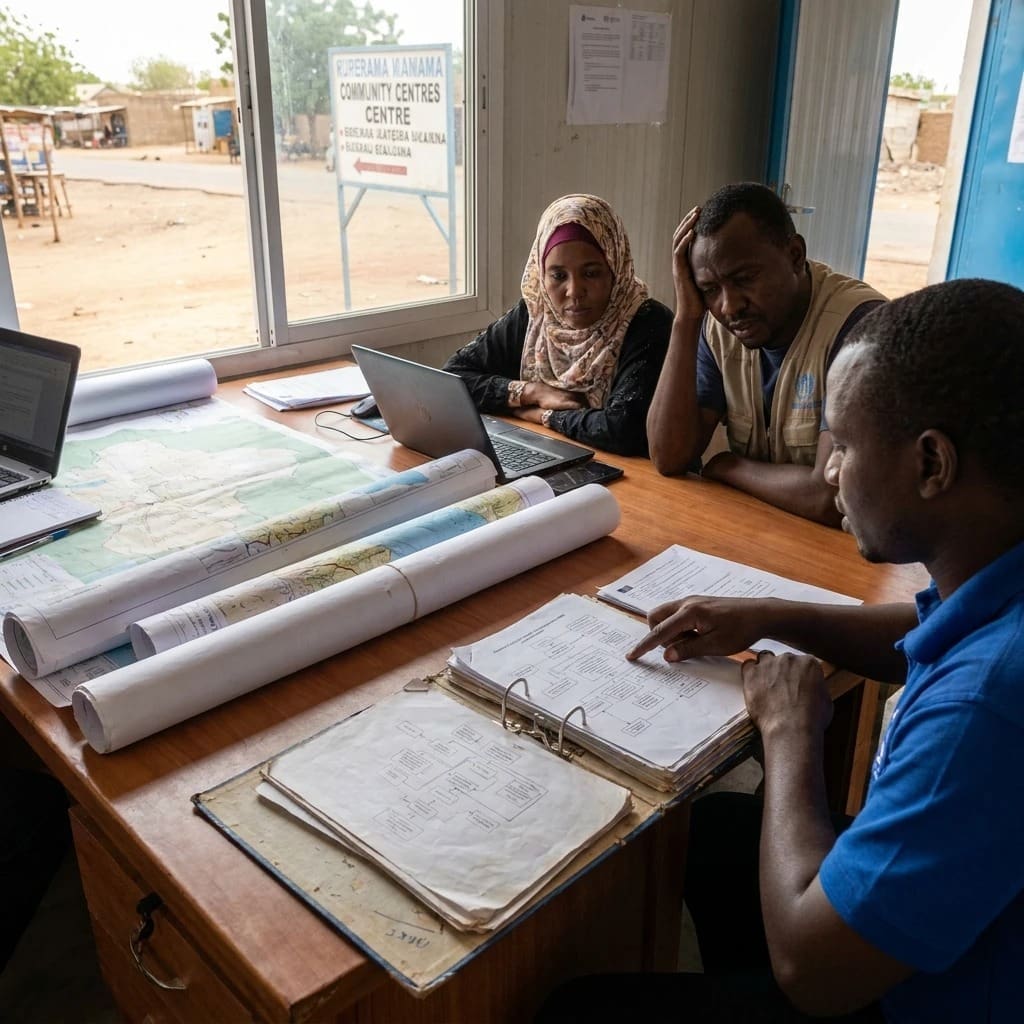

A clear, aviation-ready way to use agile without losing control, accountability, or sponsor confidence.
Introduction
Agile project management can sound like a perfect fit for aviation and aerospace until you picture the reality: safety expectations, supplier chains, certification gates, public funding rules, and sponsors who need clarity more than buzzwords. In that environment, speed without structure is not progress. It is risk.
Across complex programs, you can feel the pressure points in the same places: unclear decision rights, shifting priorities, and a growing gap between what stakeholders expect and what delivery teams can realistically ship. When work spans countries, partners, and communities, small misalignments turn into expensive delays.
This article explains what agile governance looks like when the stakes are high and the stakeholder map is crowded. You will leave with a workable model for combining agility with oversight, plus concrete steps you can use whether you are running an aviation initiative, sponsoring one, or supporting delivery through an independent program office.
TL;DR: Agile governance without the chaos
-
Aviation programs move through uncertainty, but they also move through gates, audits, and public scrutiny.
-
Sponsors and stakeholders need fast feedback and trustworthy reporting, not endless slide decks or vague status updates.
-
Teams often treat agile as a delivery method only, and forget the governance layer where decisions, risk, and funding live.
-
A better approach pairs short delivery cycles with clear decision rights, stage gates, and traceable evidence.
-
Next steps include setting a governance charter, defining a minimum viable roadmap, and building a cadence for decisions, risk reviews, and sponsor communication.
What is Agile Governance for Aviation Stakeholders and Sponsors?
Agile governance is the set of roles, decision rules, and review rhythms that keeps an agile delivery approach accountable to stakeholders. It does not replace safety, compliance, or financial oversight. It makes them easier to manage by creating short feedback loops and clear evidence of progress.
In aviation, governance also has to respect reality: certification and airworthiness expectations, supplier quality systems, data and cybersecurity requirements, and operational readiness. That means agile teams can iterate, but they cannot improvise on who approves what, when risk is escalated, or how sponsor funds are tracked.
Think of it as the connective tissue between teams building solutions and the sponsors, regulators, operators, and community partners who need predictable control.
Why Agile Governance for Aviation Stakeholders and Sponsors Matters
Aviation initiatives tend to fail in boring ways. Not because people did not work hard, but because nobody had a shared map of decisions, dependencies, and proof. Governance is where trust is built or broken.
Well-run agile governance reduces rework by forcing early clarity on outcomes, interfaces, and constraints. It also shortens the time between a concern and a decision. Sponsors get better visibility, delivery teams get fewer surprise changes, and stakeholders stop feeling like they are reading tea leaves.
Most importantly, it helps you scale learning without scaling confusion.
A decision framework for aviation-ready agile governance (not just ceremonies)
1) Start with decision rights, not sprint plans
If you want agility without whiplash, define who can decide what. In aviation, that usually includes product and operational decisions, safety and quality decisions, and funding and scope decisions. The practical tool here is a simple decision-rights matrix that names the decision, the owner, who must be consulted, and who must approve.
Without this, agile rituals become a bicycle with square wheels: lots of motion, not much travel. The takeaway: governance begins where authority is explicit.
2) Use dual-track planning: delivery cadence plus gate cadence
Short iterations help teams learn. Gates help organizations control risk. You can run both by separating cadence types:
-
Delivery cadence (weekly or biweekly): build, test, review, and integrate.
-
Governance cadence (monthly or per milestone): risk review, funding review, readiness checks, stakeholder commitments.
This is where agile project management becomes credible to sponsors because it produces a steady stream of evidence, while still honoring non-negotiable controls. Takeaway: iterations are for learning, gates are for commitment.
3) Treat risk and compliance as backlog items with owners
In aviation, risk is not a side document. It is work. The cleanest pattern is to put compliance and risk mitigation into the same system the team uses to manage delivery. Give each item an owner, acceptance criteria, and a due date tied to a gate.
Around the middle of winter in Winnipeg, you learn fast that you do not argue with physics. Ice wins. Aviation governance is similar: constraints do not care about optimism. Takeaway: make constraints visible and actionable, or they will surface later as delays.
4) Make sponsor reporting boring on purpose
Good sponsor reporting is not dramatic. It is consistent. A strong agile governance pack usually includes:
-
Outcomes delivered and outcomes in progress
-
Burn-up of scope or capabilities (not just hours)
-
Top risks with mitigations and decision requests
-
Spend to date and forecast, tied to deliverables
-
Dependency and supplier status
This is where Project Blue World often sees the biggest payoff in consulting: turning scattered updates into a single, decision-ready narrative that sponsors can trust. Takeaway: predictable reporting reduces sponsor anxiety and prevents reactive scope changes.
5) Build stakeholder alignment into the workflow
Aviation programs often include operators, maintainers, community partners, donors, government bodies, and suppliers. Each group has different definitions of “done.” Agile governance works when stakeholder input is structured, time-boxed, and translated into testable requirements or acceptance criteria.
If you run global programs, a distributed network helps. A curated expert database like The Grid can shorten the time to find the right specialist for a certification question, a procurement snag, or an operational readiness review. Takeaway: stakeholder alignment is a system, not a meeting.
How to Apply This
Use this six-step setup to get traction in two to four weeks:
-
Write a one-page governance charter. Include objectives, decision rights, escalation paths, and meeting cadence.
-
Define three levels of outcomes. Mission outcome (why), program outcomes (what), iteration outcomes (next).
-
Create a dual cadence calendar. Put delivery reviews on one rhythm and sponsor and gate reviews on another.
-
Stand up one source of truth. A backlog plus a simple dashboard that ties work to outcomes, risk, and spend.
-
Run a “decision clinic” meeting. A short weekly session where decisions are prepared, made, and recorded.
-
Pilot, then scale. Prove the model on one workstream before rolling it across suppliers and regions.
If you do only one thing, make decisions visible and time-bound.
Frequently asked questions
How is this different from standard agile delivery?
Standard agile focuses on how teams plan and build. Governance adds how sponsors and stakeholders decide, fund, and control risk. In aviation, that layer is where most delays start.
Does agile governance work with certification and stage gates?
Yes, when gates are treated as commitment points and iterations are treated as learning cycles. You can iterate within constraints while still meeting formal review requirements.
What should sponsors ask for to reduce surprises?
Ask for outcome-based reporting, top risks with mitigations, and explicit decision requests. Also ask how dependencies and suppliers are tracked inside the delivery system.
When does agile become the wrong tool?
If the work is fully defined, low uncertainty, and mostly repetitive, a predictive approach can be simpler. Many aviation initiatives are mixed, so hybrid delivery is common.
Where does agile project management fit in a nonprofit consulting model?
It fits when consulting revenue supports social projects and delivery has to stay accountable across partners. Done well, agile governance creates transparency that sponsors and communities can both understand.
Final takeaway: Key Takeaways from the cockpit, not the classroom
-
Agile governance is about decision rights, evidence, and cadence, not extra meetings.
-
Aviation-ready agility uses iterations for learning and gates for commitments.
-
Compliance and risk mitigation need owners and acceptance criteria, just like features.
-
Sponsors trust consistent reporting that ties outcomes, risk, and spend together.
-
A global partner network can speed up problem-solving when expertise is scarce.
-
Agile project management works best when governance is designed, not assumed.
When aviation stakeholders and sponsors ask for agility, they are usually asking for faster learning and fewer surprises. The only way to deliver that is to pair short cycles with clear authority, transparent evidence, and a steady decision rhythm. That approach respects safety and oversight while still allowing teams to adapt. It also helps sponsors fund with confidence because they can see what is real, what is at risk, and what needs a decision. If your initiative spans countries, suppliers, and communities, governance is the difference between “busy” and “moving.” And yes, it can still be simple, like a checklist taped to a flight bag next to a single, stubborn paperclip that has somehow survived five program phases.
Call to action
If you want help setting up agile governance that sponsors can trust and delivery teams can actually use, contact Project Blue World through our contact page.