Business Feasibility Analysis Checklist for Aerospace Initiatives: A Practical Guide for Real Decisions
A grounded checklist to test your aerospace idea against costs, risk, regulation, partners, and delivery capacity before you spend the big money.
Introduction
Business feasibility analysis is the fastest way to turn an aerospace initiative from a persuasive slide deck into a decision you can defend. In aviation and space projects, the stakes pile up quickly: certification pathways, long lead times, specialized suppliers, safety constraints, and funding that often comes with strings attached.
Right now, teams are being asked to do more with less while still proving impact and reliability. That’s true whether you’re building a new training program at an airport, exploring an acquisition, pitching an air mobility service, or designing a social initiative that relies on aviation logistics. If you’ve ever watched a promising idea stall because one missing assumption collapsed the plan, you already know why feasibility work matters.
This article gives you a practical, aerospace-specific checklist, plus a simple way to apply it whether you’re a business leader, a government partner, a donor, or a technical expert considering joining a global delivery network like The Grid. By the end, you’ll have a clear structure for pressure-testing your initiative and deciding what to do next.
TL;DR: The Checklist in Plain Language
- You’re trying to decide if an aerospace initiative is viable before you commit budget, reputation, or partner relationships.
- Feasibility matters because aerospace projects fail expensively and slowly, often due to overlooked certification, supply chain, or delivery realities.
- Many teams focus on the concept pitch and under-check the operating model, regulatory path, and who will actually deliver the work.
- A better approach is to treat feasibility as a set of testable assumptions across market demand, technical readiness, compliance, finances, and execution.
- Next steps: run a structured checklist, score gaps, decide what must be proven first, and build a staged plan that reduces risk before scale.
What Is Business Feasibility Analysis for Aerospace Initiatives?
Business feasibility analysis is a structured way to test whether a proposed initiative can work in the real world and under real constraints. It typically covers market demand, technical viability, regulatory and legal considerations, financial model, operational delivery, and risk.
In aerospace and aviation, feasibility has an extra layer: you’re not only asking, “Can we sell it?” You’re also asking, “Can we certify it, insure it, maintain it, staff it, and sustain it?” A feasibility check turns unknowns into a list of assumptions, then turns assumptions into evidence you can validate.
Why Business Feasibility Analysis Matters in Aerospace
Aerospace initiatives have a habit of looking simple from 30,000 feet and getting complicated on the ground. One overlooked constraint can trigger a chain reaction: a supplier delay affects testing, which affects certification timelines, which affects funding milestones, which affects partner confidence.
For leaders and social entrepreneurs, feasibility protects your credibility. For sponsors, donors, and benefactors, it clarifies what their funding actually enables and what it cannot. For government and community teams, it supports transparency and procurement defensibility. A solid feasibility approach also makes it easier to bring in outside experts because everyone can see what’s known, what’s unknown, and what “done” means.
Business Feasibility Analysis Checklist for Aerospace Initiatives: The 10 Tests That Matter
Think of this checklist like a preflight walkaround, but for your business case. Skip steps and you might still taxi out, but you won’t like what happens later. Here are the ten tests worth running early.
1) Mission and scope: What problem are you solving, exactly?
Define the user, the outcome, and the boundary conditions. Aerospace initiatives often drift because “innovation” becomes the goal. Write a one-paragraph scope that includes what is not included.
Takeaway: If you can’t draw a clean scope boundary, you can’t estimate cost or risk.
2) Stakeholders and governance: Who decides, who delivers, who signs off?
Map decision rights across the owner, regulators, airport authorities, community partners, and funders. Include escalation routes and change control.
Takeaway: Governance is a delivery tool, not a formality.
3) Market demand and customer proof: Who will pay, adopt, or approve?
Identify the customer and the buyer separately. In aviation, the “user” and the “payer” often differ. Validate demand with letters of intent, pilot partners, or procurement signals, not only surveys.
Takeaway: Demand without a buyer is a hope, not a plan.
4) Technical readiness: What’s proven, what’s prototype, what’s aspirational?
Use Technology Readiness Level style thinking even if you don’t label it that way: lab concept, prototype, tested in relevant environment, operationally proven. Confirm integration needs: avionics, comms, maintenance tooling, data systems.
Takeaway: A great prototype can still be years away from operations.
5) Regulatory and certification path: Which rules apply, and when?
Certification, operating approvals, safety management, environmental requirements, data privacy, export controls, and procurement rules can all shape feasibility. You don’t need every answer on day one, but you do need a credible pathway and who owns it.
Takeaway: If the regulatory path is fuzzy, your timeline is fiction.
6) Supply chain and partners: Can you actually source and support it?
Check vendor availability, lead times, single points of failure, and after-sales support. Aerospace supply chains can stretch globally and snap unexpectedly.
Takeaway: The plan is only as strong as its hardest-to-replace supplier.
7) Financial model: What does it cost to build, launch, and operate?
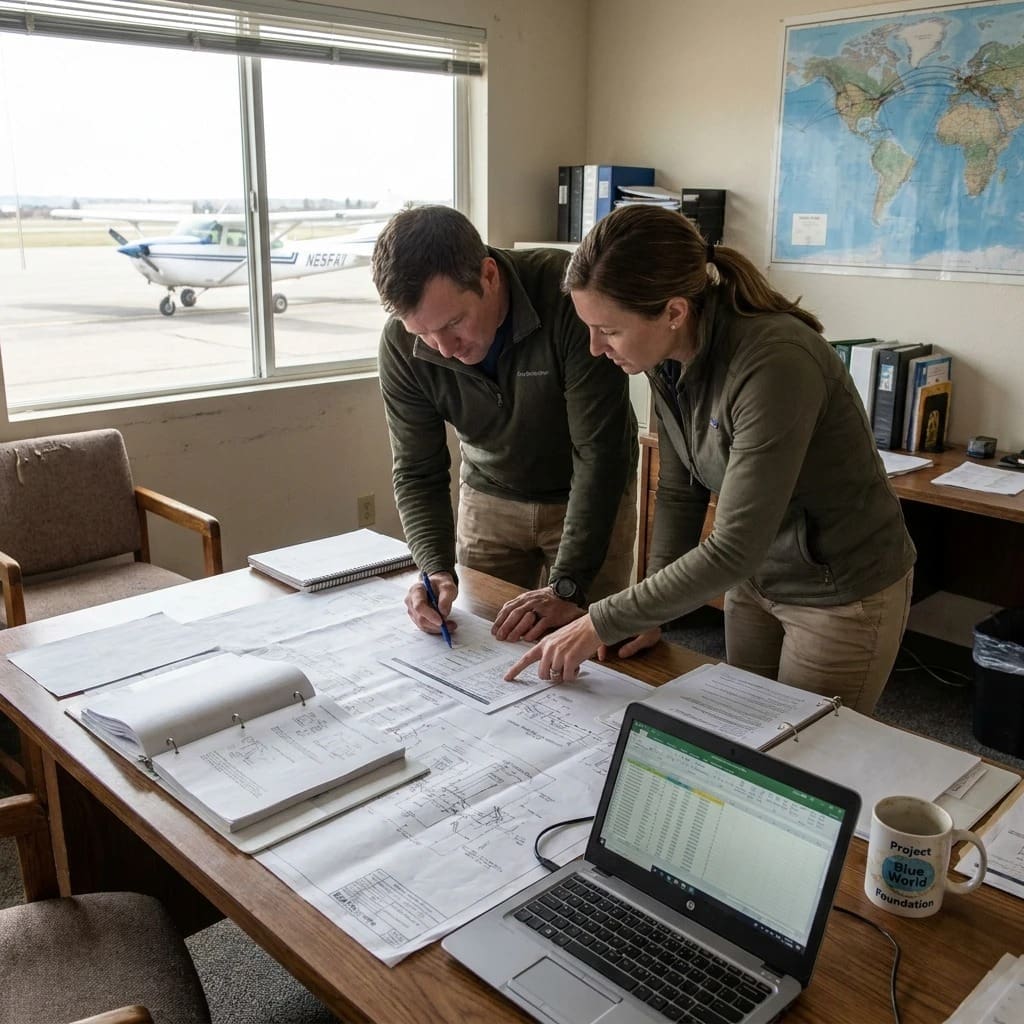
Build a simple model with capital costs, operating costs, staffing, certification and testing, insurance, and contingencies. Tie funding tranches to proof points. For nonprofit-led initiatives, separate program costs from overhead and show sustainability.
Takeaway: Cash flow timing matters as much as total cost.
8) Risk, safety, and assurance: What can go wrong, and how do you control it?
Document safety hazards, operational risks, schedule risks, and reputational risks. Define mitigations and owners. If you need an independent delivery function, name it now.
Takeaway: Risks don’t shrink because they’re not written down.
9) Delivery plan and resourcing: Who will run the work week to week?
Define the workplan, milestones, and roles: project manager, engineering leads, compliance leads, procurement, communications. This is where many initiatives fail because they confuse “supportive partners” with “accountable delivery.”
Takeaway: A project plan without named owners is a calendar, not execution.
10) Impact and measurement: What will success look like, and how will you prove it?
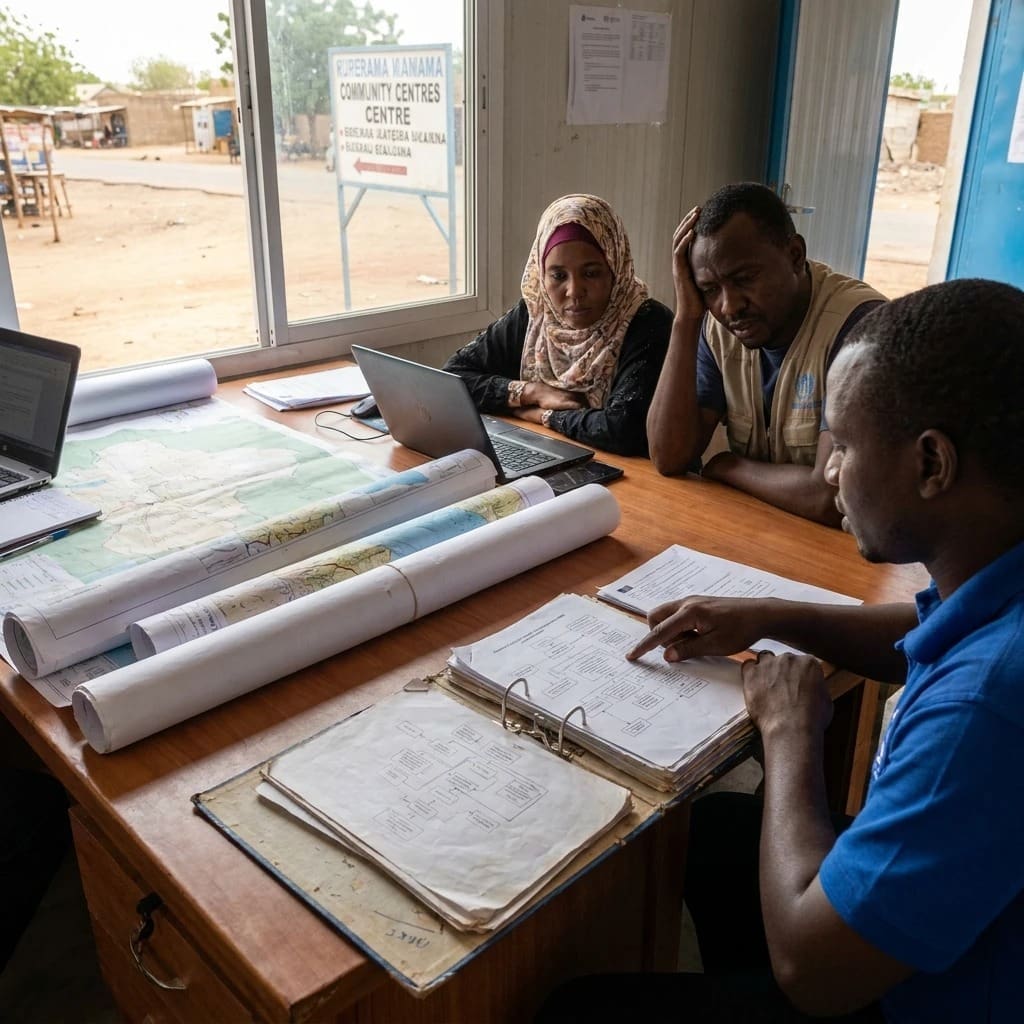
For social and public-facing aerospace initiatives, define outcomes, metrics, and reporting cadence. Sponsors and government bodies will ask for evidence, not just activity.
Takeaway: If you can’t measure it, you can’t manage it or defend it.
A Winnipeg Reality Check: Local Conditions, Global Projects
Even when you’re operating globally, feasibility still starts somewhere specific. In Winnipeg, you learn quickly that conditions shape operations. Weather affects scheduling, equipment choices, and training cycles. The same mindset applies to aerospace initiatives in any region: local constraints, workforce availability, and infrastructure will either support your plan or slowly grind it down.
That’s why feasibility should include a “where will this actually run?” lens, even if your partner network spans multiple countries.
How to Apply This
Use this short process to turn the checklist into a decision tool:
- Write your initiative on one page: problem, user, proposed solution, and success definition.
- Run the ten tests and score each area: Green (supported), Yellow (partially supported), Red (unsupported).
- List your top five assumptions that must be proven before major spend (example: regulatory pathway, supplier lead times, pilot partner commitment).
- Design a 30 to 90 day proof plan with clear outputs: a regulator meeting summary, a draft certification plan, supplier quotes, a pilot MoU, a preliminary budget.
- Assign owners and cadence: weekly delivery check-ins and monthly sponsor updates.
- Decide your next move: proceed, pause to de-risk, or stop.
If you need outside capacity, tools like The Grid can help match specialized expertise to the proof plan without guessing who to call.
Frequently Asked Questions
What’s the difference between feasibility and a business plan?
Feasibility tests whether the idea can work and what must be true. A business plan is a broader narrative and operating model, usually built after feasibility work reduces uncertainty.
How early should we do a business feasibility analysis?
Do it before irreversible commitments: signing long contracts, hiring a large team, or announcing public timelines. Early feasibility is cheaper because changes are easier.
Who should be involved in aerospace feasibility work?
A mix of commercial, technical, regulatory, operations, and finance voices. If the initiative has public impact, include community and sponsor perspectives early.
How do we handle uncertainty without getting stuck?
Separate what you must know now from what you can learn later. Build a staged proof plan and only unlock bigger spending once key assumptions are validated.
When should we bring in independent project delivery support?
When governance is complex, funding is tied to milestones, or the team lacks dedicated project management. Independent delivery also helps when multiple partners need neutral coordination.
Rocket Fuel for Decisions: Key Takeaways on Business Feasibility Analysis Checklist for Aerospace Initiatives
- Use business feasibility analysis to convert assumptions into evidence before major commitments.
- Aerospace feasibility must include regulatory pathways, safety assurance, and supply chain reality, not only market demand.
- A checklist works best when it produces a short proof plan with owners, outputs, and dates.
- Sponsors, donors, and public partners benefit from feasibility because it improves transparency and defensibility.
- Delivery capacity is part of feasibility, not an afterthought.
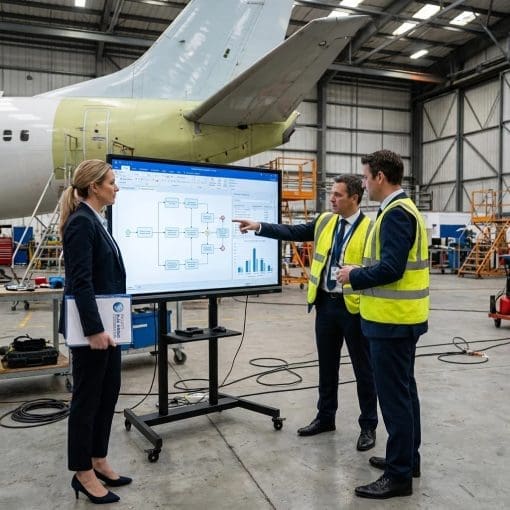
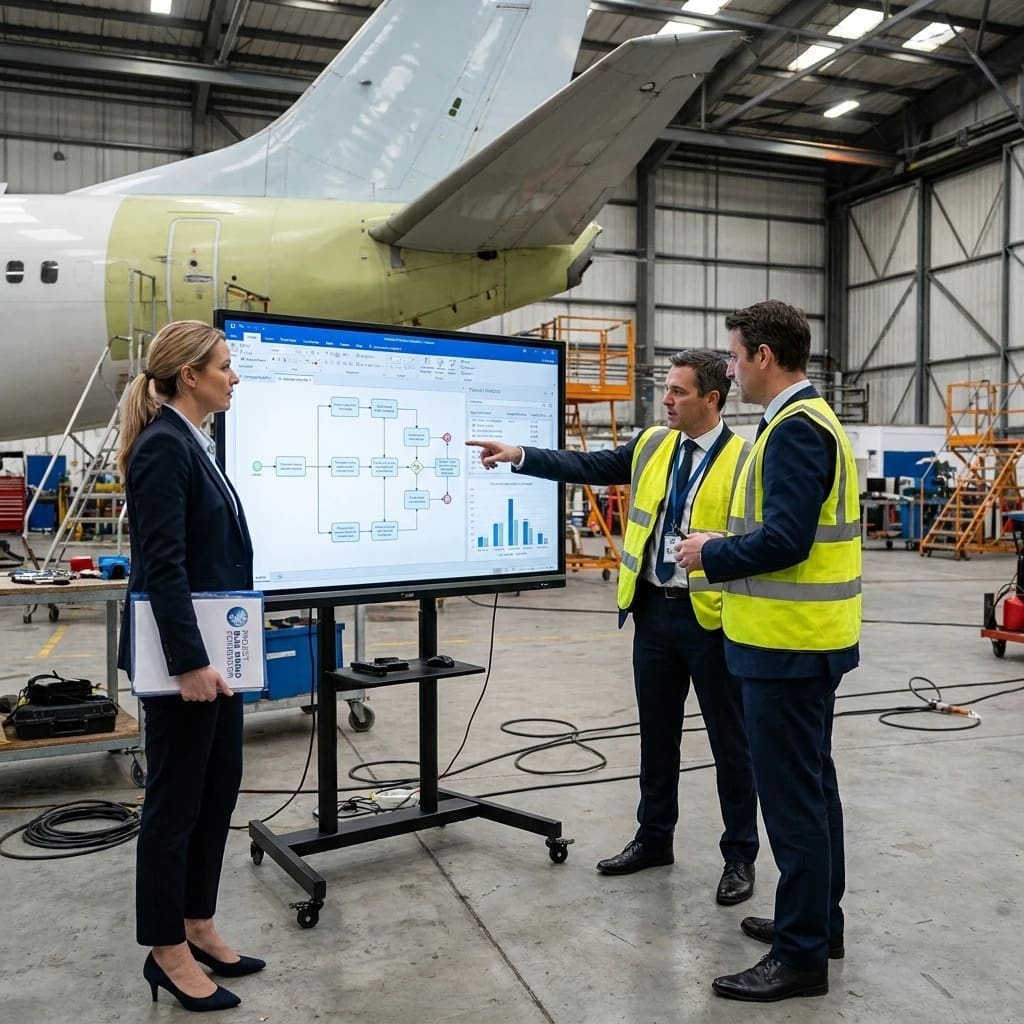
A strong Business Feasibility Analysis Checklist for Aerospace Initiatives does not kill good ideas. It protects them from preventable failure and helps you sequence the work so credibility grows with each milestone. If you’re balancing commercial goals with social outcomes, feasibility gives you a shared language with partners who care about different things. The most useful result is not a thick report but a short list of validated assumptions and a clear plan for what happens next. Somewhere near the end of this process, you’ll want one oddly specific artifact: a one-page “decision log” that records why you chose each major tradeoff, even if it’s written on a clipboard sheet during a hangar walk-through. That record saves time when leadership changes or funding questions show up months later.
Call to Action
If you want an independent, structured feasibility run that fits complex aerospace and aviation initiatives, contact Project Blue World through our contact page.