
How to Run a Project Feasibility Test Without Wasting Time or Credibility
A practical, consulting-style guide to deciding what to build, what to pause, and what to fix before you ask for funding or commit a team.
Introduction
A solid project feasibility study turns a good idea into a decision you can defend, whether you are launching an aviation training program, upgrading an MRO facility, or funding a community project with multiple partners. The problem is that many feasibility efforts either get too academic to guide action, or too optimistic to protect you when reality shows up.
That gap matters more right now because complex initiatives are being built across borders, supply chains are unpredictable, and funders expect proof of delivery readiness. When your stakeholders include operators, regulators, donors, sponsors, and local communities, a weak feasibility process does not just waste money. It erodes trust and slows future approvals.
This article breaks down a clear way to run a feasibility test that fits real-world consulting work: what to assess, how to structure it, what evidence to collect, and how to present a decision. You will leave with a lightweight framework you can apply in aerospace, aviation, government, or nonprofit delivery work.
TL;DR: The Feasibility Test in Plain Language
- You are trying to decide if a project should proceed, change shape, or stop before it becomes expensive to reverse.
- This matters because aerospace and community initiatives have long lead times, many dependencies, and high reputational stakes.
- Feasibility work often fails when it confuses a business case with a wish list, skips constraints, or ignores who will actually operate the outcome.
- A better approach is to treat feasibility as a set of pass or fix gates across scope, market need, delivery capacity, risk, and funding logic.
- Next steps include defining a decision question, mapping assumptions, validating constraints, building a simple model, and producing a go, no-go, or redesign recommendation.
What Is a Project Feasibility Study?
A project feasibility study is a structured way to test whether an idea can be delivered and sustained under real constraints. It combines evidence, assumptions, and practical delivery planning into a recommendation: proceed, pause, pivot, or stop.
In management consulting terms, feasibility is not the same as strategy and not the same as project planning. Strategy clarifies what you want and why. Planning details how you will deliver once you have committed. Feasibility sits in the middle, reducing uncertainty enough that decision-makers can commit resources responsibly.
Why a Project Feasibility Study Matters
A project feasibility study protects two scarce assets: money and credibility. In aviation and aerospace, the timelines are long, the compliance requirements are real, and the operational consequences of poor planning can be severe. For social projects, the cost of failure is often carried by communities and frontline teams, not just a balance sheet.
Feasibility also creates alignment. When sponsors, government bodies, donors, and internal teams interpret the project differently, the first serious disagreement tends to show up late, right when momentum makes it hardest to change course. A good feasibility test pulls those differences forward while it is still safe to adjust.
How to Run a Project Feasibility Test: A Step by Step Guide
1) Start With the Decision, Not the Dream
A feasibility test should begin with a single sentence that defines the decision you need to make. For example: “Should we invest in a regional aviation maintenance training program that can graduate 60 technicians per year within 18 months?”
Then list what must be true for that decision to be a “yes.” These are your critical assumptions. Treat them like a house of cards you are about to tap, gently but on purpose. If one key assumption fails, you want to find out now, not after hiring staff or signing leases.
Takeaway: The clearest feasibility work is built around a decision question and a short list of make-or-break assumptions.
2) Test Feasibility Across Five Lenses That Don’t Lie
Most strong feasibility work covers the same core domains, even when the project type changes. The difference is how you weight them.
Here is a useful consulting structure:
| Feasibility lens | What you are testing | Typical evidence |
|---|---|---|
| Demand and outcomes | Who needs it and what changes if it works | Stakeholder interviews, usage forecasts, baseline data |
| Technical and operational | Can it be built and run day-to-day | Site constraints, staffing plan, maintenance needs |
| Financial and funding | How costs and funding timing behave | Cost model, cash flow timing, funding conditions |
| Delivery capacity | Whether the team can execute | Governance, skills, procurement path, partners |
| Risk and compliance | What can stop it or slow it | Regulatory needs, safety constraints, political risk |
In aerospace and aviation, compliance and operational readiness often carry more weight than in many other sectors. In community delivery projects, governance and partner coordination tend to be the fragile points.
Takeaway: When you cover these lenses consistently, your recommendation becomes easier to trust and easier to communicate.
3) Build a Reality-Based Cost and Timeline Model
Your model does not need to be fancy. It does need to be honest about what drives cost and schedule.
Focus on the cost drivers that typically move the needle: labour, facilities, equipment, certifications, travel, and vendor lead times. For schedule, map dependencies and decision gates. A timeline that assumes approvals happen instantly is not a plan, it is a hope with dates attached.
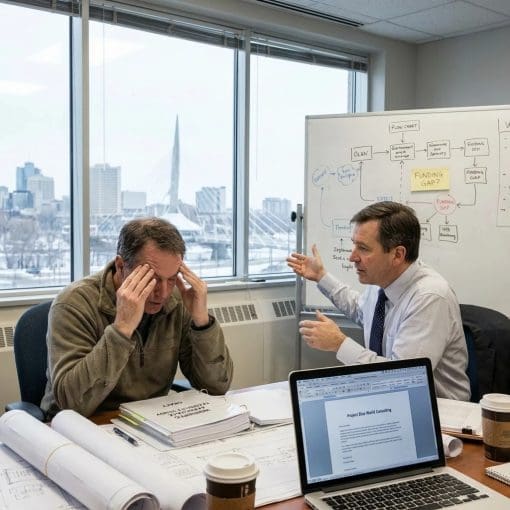
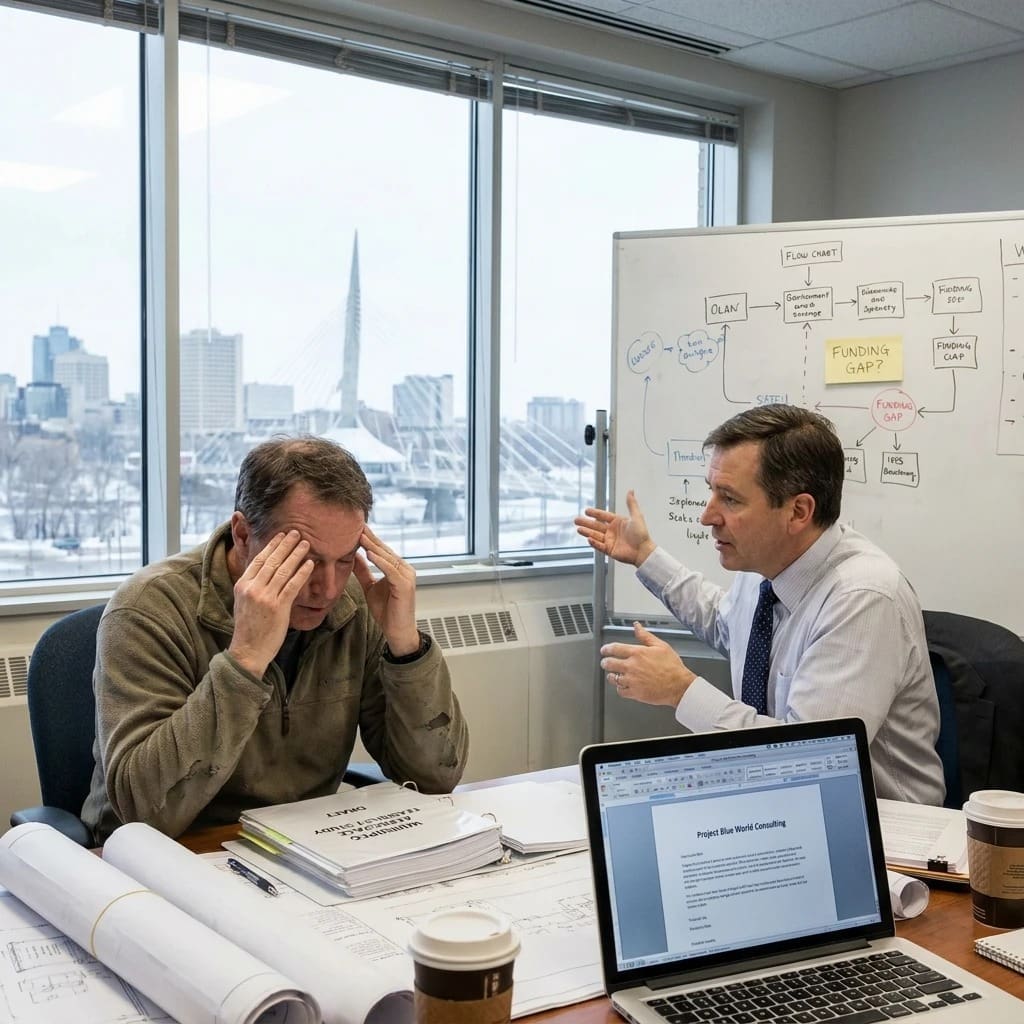
Around the middle of winter in Winnipeg, you learn to respect delays you cannot negotiate with. The same mindset applies to feasibility: weather, shipping, permitting, and partner readiness all create “seasonality” in delivery, even when the project is global.
Takeaway: A simple, transparent model beats a complex spreadsheet that hides assumptions.
4) Design the Proof, Then Collect It Efficiently
A project feasibility study is only as strong as the evidence behind it. The trick is to match the depth of research to the risk of the decision.
Use a tiered approach:
- Tier 1: Quick validation for low-cost, reversible decisions (desk research, short interviews).
- Tier 2: Targeted verification for medium risk (site visits, vendor quotes, prototype checks).
- Tier 3: Deep validation for high risk or regulated environments (formal assessments, compliance reviews, independent technical input).
If your project spans multiple countries or stakeholder groups, use a consistent interview script and a shared definitions page. Without that, you will collect opinions that cannot be compared.
Takeaway: Decide what proof you need before you start collecting information, or you will collect a lot and learn little.
5) Make the Recommendation Actionable: Go, No-Go, or Redesign
A feasibility report that ends with “it depends” is not a feasibility report. Decision-makers need a recommendation and the conditions attached to it.
A clean close looks like this:
- Recommendation: Go, No-Go, or Redesign.
- Conditions: What must be completed before funds are released or work begins.
- Risk posture: Top risks, early warning signals, mitigation owners.
- Next 30 days: Concrete actions, who owns them, and what “done” means.
This is also where a global expert network can help. When you need an independent estimator, a regulatory perspective, or a regional operator view, curated expert matching can reduce blind spots. Project Blue World’s Grid, for example, is built for connecting specialists with projects that need real-world input, not generic templates.
Takeaway: The best feasibility work ends with a decision package, not just analysis.
How to Apply This
Use this quick process the next time you need to test an initiative before committing:
- Write the decision question in one sentence.
- List 5 to 10 critical assumptions and rank them by impact if wrong.
- Score each assumption with: evidence strong, evidence mixed, evidence missing.
- Run the five-lens review (demand, technical, financial, capacity, risk).
- Build a one-page cost and timeline model with visible drivers.
- Identify the minimum proof needed to change each weak assumption.
- Draft your recommendation with conditions and a 30-day action plan.
- Share it with one sceptical reviewer on purpose and revise once.
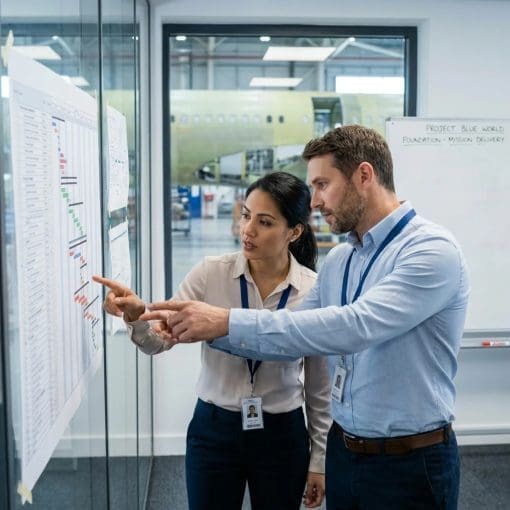
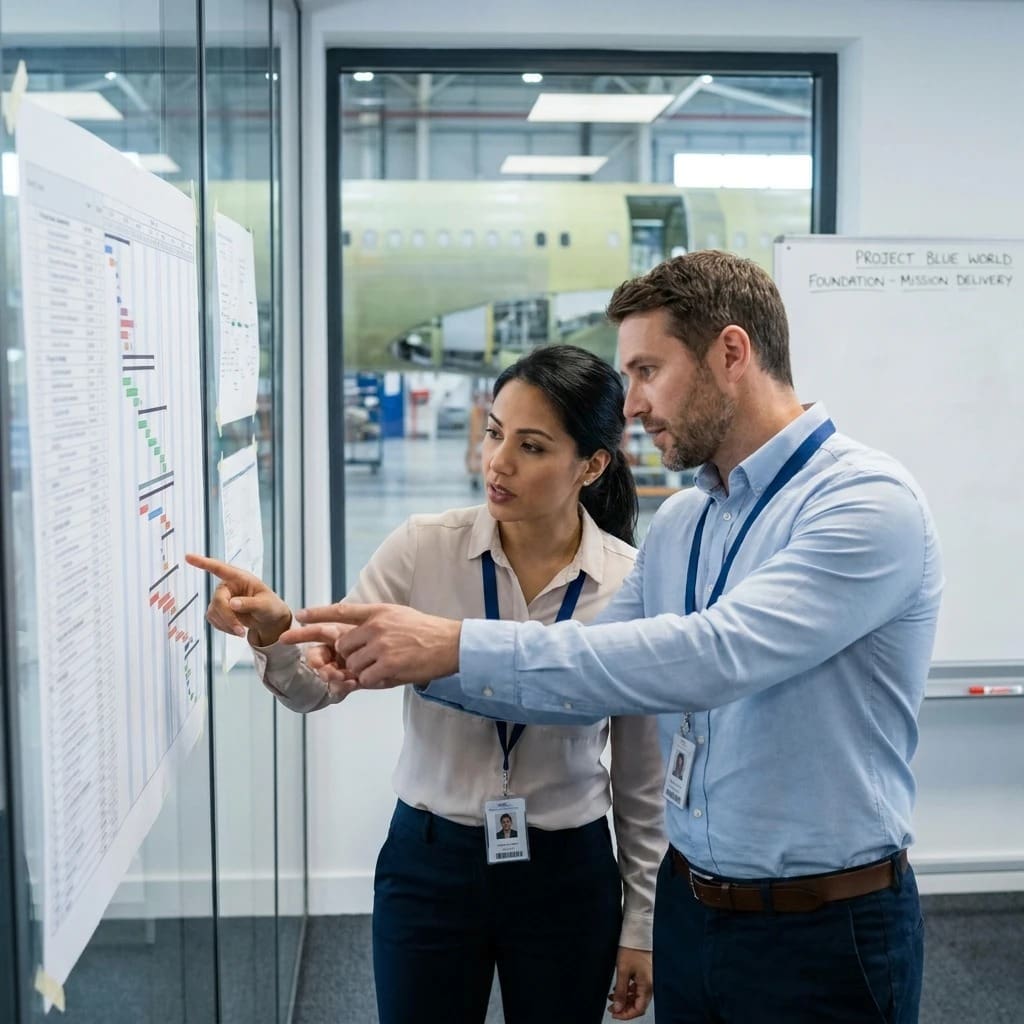
If you want a quirky but useful check, print the one-page summary and read it while standing beside a literal whiteboard or, if you are in a hangar, beside a tool crib. If the plan cannot survive that setting, it is probably too abstract.
Frequently Asked Questions
How long should a feasibility test take?
It depends on risk and complexity. A light feasibility pass can take a few weeks. Projects with regulatory requirements, multiple partners, or significant capital costs often require longer because evidence collection and approvals take time.
What is the difference between a feasibility study and a business case?
A feasibility test asks, “Can we deliver this responsibly under constraints?” A business case focuses on, “Is it worth doing compared to alternatives?” Strong decisions often use both, in that order.
Who should be involved?
At minimum: the sponsor, the future operator, finance, delivery lead, and someone accountable for risk and compliance. For aviation and aerospace, include technical operations and quality or safety representation early.
What should the final deliverable look like?
Keep it readable. A short decision memo supported by appendices often works better than a long report. The goal is clarity: recommendation, evidence, assumptions, costs, timeline, risks, and conditions.
When should we stop a project based on feasibility?
Stop when a make-or-break assumption fails and the cost to redesign is higher than the value. Stopping early is a success if it prevents sunk-cost decisions.
Final Takeaway: Key Takeaways From the Preflight Checklist
- A project feasibility study is a decision tool, not a document exercise.
- Start with a single decision question and test the assumptions that can break it.
- Use five lenses to avoid blind spots: demand, technical, financial, delivery capacity, and risk.
- Keep cost and schedule models simple, transparent, and constraint-aware.
- End with a clear go, no-go, or redesign recommendation with conditions and next steps.
A feasibility test works best when it is honest about constraints and generous with clarity. If you are building in aviation, aerospace, government, or community systems, you are rarely short on ideas. You are usually short on decision-grade proof. Do the small hard work early, and delivery gets calmer later. If you want outside eyes, bring them in while change is still inexpensive. The payoff is not just a better plan, but a decision you can defend to funders, regulators, partners, and your own team.
Call to action
If you want an independent feasibility sprint or a structured review of your assumptions and delivery plan, reach out through Project Blue World’s contact page.