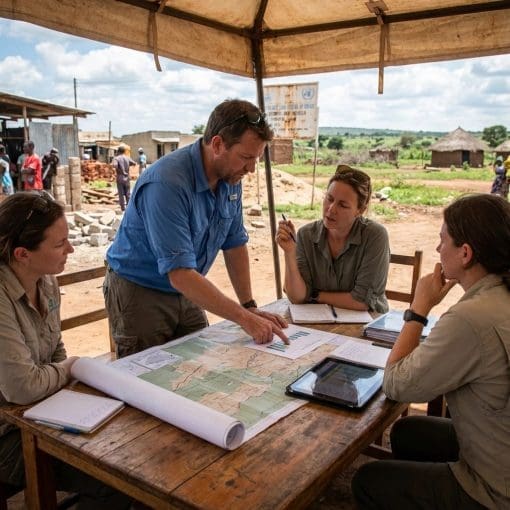
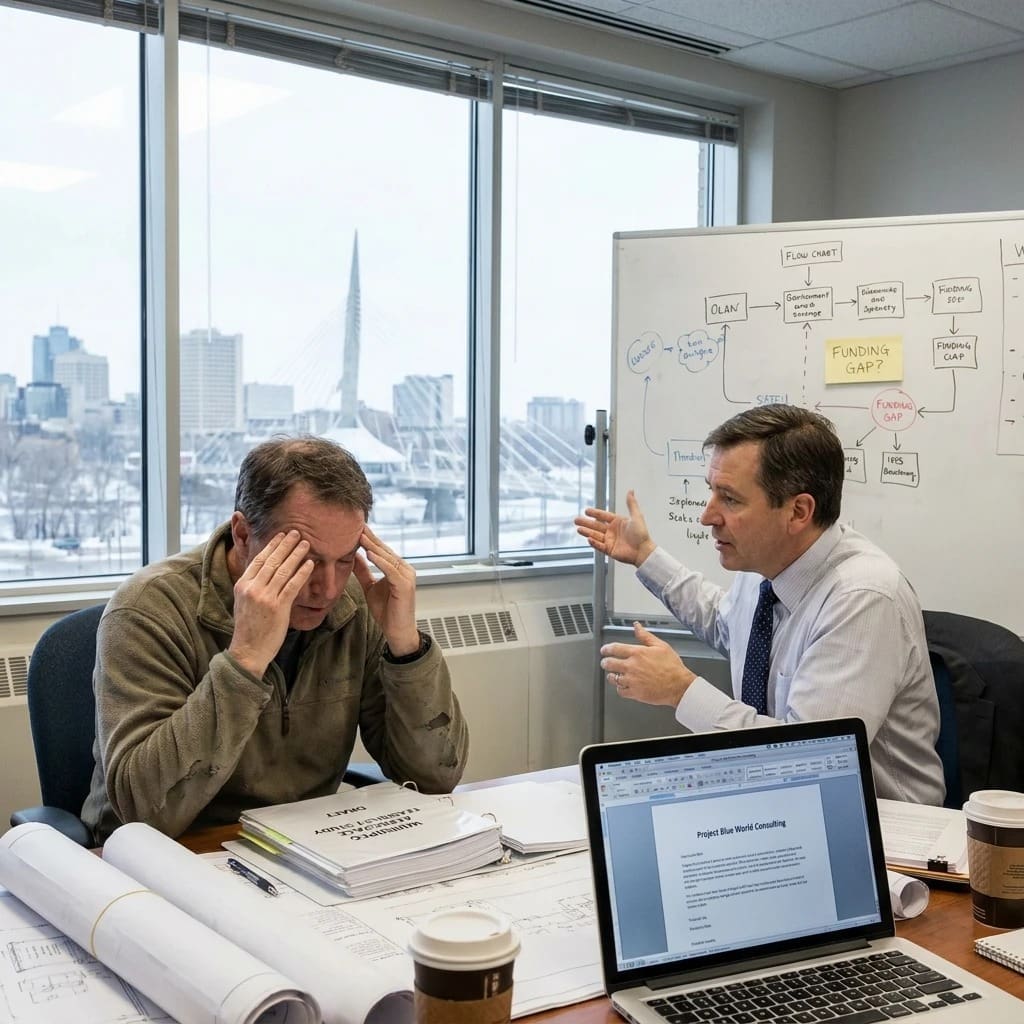
Winnipeg Aerospace Project Feasibility Study Example Template: A Practical Guide for Getting to a Real Go or No Go
A clear, usable way to structure an aerospace feasibility study so sponsors, teams, and decision makers can act with confidence.
Introduction
If you are looking for an example of project feasibility study for an aviation or aerospace initiative in Winnipeg, you are probably already feeling the pressure to move from a good idea to a funded, buildable plan. That pressure is where projects often slip: no clear owner, no shared structure, and no proof that the concept survives contact with reality.
That gap matters right now because aerospace and aviation projects tend to involve long lead times, safety and compliance considerations, specialized vendors, and funding partners who want more than enthusiasm. When a proposal stalls, it is rarely because the mission was wrong. More often, nobody pulled together the feasibility work, the resourcing plan, and the delivery path in one place.
This article shows you what a Winnipeg aerospace project feasibility study example template looks like in practice, what strong feasibility studies usually include, and how to use the document to make decisions, not just produce paperwork.
TL;DR: What You Need and What You Will Get Out of It
- Most aerospace and aviation initiatives fail early due to missing structure: unclear scope, thin costing, vague risks, and no delivery plan.
- A feasibility study helps you earn trust with sponsors, donors, and public sector partners because it shows your assumptions and your math.
- People often jump straight to budgets or timelines without defining success criteria, constraints, and operating model realities.
- A better way to think about feasibility is as a decision tool: it narrows options, tests constraints, and clarifies what must be true to proceed.
- Next steps: use a simple template, fill it with evidence you can defend, and end with a clear recommendation and conditions for a go decision.
What Is an Example of Project Feasibility Study?
An example of project feasibility study is a structured document that tests whether a project can and should be delivered. It usually covers the case for the project, the options, the constraints (technical, operational, legal, financial), the risks, and the recommended path forward.
In aerospace, feasibility is not only about cost. It is also about certification implications, safety management, supply chain reality, facility readiness, human factors, and the ability to operate the asset or program after launch. A strong feasibility study makes the “unknowns” visible early, while there is still time to change course cheaply.
Why an Example of Project Feasibility Study Matters
A feasibility study protects two things at once: your mission and your credibility. If you are pitching a training program, a maintenance expansion, a new air service concept, an aircraft acquisition, or a community aerospace initiative, people will ask, “What is the plan, and what happens if the hard parts show up?”
This is where good consulting practice earns its keep. You are not trying to sound impressive. You are trying to show you understand the real work: permitting, procurement, quality systems, governance, staffing, and funding mechanics. The payoff is speed later, because decisions stop bouncing around and start getting made.
The Winnipeg Aerospace Project Feasibility Study Example Template, Section by Section
Think of a feasibility study like a flight plan, except the weather is stakeholders, and the turbulence is your assumptions. If you skip steps, you can still take off, but you may not like where you end up.
1) Executive summary with a decision, not a teaser
Start with the recommended option and the decision required. Include the project’s purpose, headline costs, expected benefits, key risks, and the conditions for approval (for example, secured facility access, a confirmed operator, or minimum funding commitments). If a sponsor reads only two pages, they should still understand the “why” and the “so what.”
Takeaway: A feasibility study that avoids a recommendation is a report, not a tool.
2) Problem statement, outcomes, and success criteria
Define the need in plain language, then define what “done” means. For aerospace projects, success criteria should include operational measures (dispatch reliability targets, training throughput, maintenance turn times), compliance measures, and stakeholder outcomes (community benefit, jobs, access, or safety improvements).
Here is where many initiatives drift. If you cannot define success, you cannot estimate cost, schedule, or risk credibly.
Takeaway: Clear outcomes reduce scope creep faster than any project policy.
3) Options analysis (at least three, including “do nothing”)
List viable options and compare them consistently. In a Winnipeg aerospace context, options might include partnering with an existing facility versus building, leasing versus buying an aircraft, or using a phased rollout versus a single launch date. Include a “do nothing” baseline so stakeholders can see the cost of delay.
Around the middle of winter, when Portage and Main is doing what it does and everybody wants to get indoors fast, decision makers do not want ten options. They want three that were tested properly.
Takeaway: Good options analysis creates focus without forcing a premature choice.
4) Feasibility across five lenses: technical, operational, financial, legal, and social
This is the core. For each option, document constraints and evidence.
A simple comparison table helps:
| Feasibility lens | What to answer | What to attach or reference |
|---|---|---|
| Technical | Can it be built or configured with available capability? | High level architecture, vendor capability notes |
| Operational | Can it be run day to day with real staffing and processes? | Org chart draft, operating model assumptions |
| Financial | Is there a plausible funding and cash flow path? | Cost model, funding sources, sensitivity notes |
| Legal and regulatory | What approvals and compliance obligations apply? | Compliance checklist, certification impacts |
| Social and stakeholder | Who benefits, who must agree, and who might object? | Stakeholder map, engagement plan |
Takeaway: Feasibility is multidimensional, especially when safety and public trust are in the mix.
5) Delivery plan: governance, workstreams, and schedule logic
Even a high level plan needs real structure: who owns decisions, how procurement works, how change control happens, and what milestones actually mean. A Winnipeg aerospace project feasibility study example template should show workstreams such as facilities, operations, compliance, procurement, and partnerships, with dependencies between them.
This is also where you show your resourcing reality: named roles, not magical “team support.”
Takeaway: If you cannot describe how it will be delivered, you cannot claim it is feasible.
Practical Application: How to Apply This
How to Apply This
- Write the one sentence decision question. Example: “Should we proceed with Option B, contingent on securing X funding and Y operator commitment?”
- List assumptions and mark them as proven or unproven. If it is unproven, assign an owner and a date to validate it.
- Build a simple options table. Score options against the same criteria: cost, time, compliance complexity, operational readiness, and stakeholder acceptance.
- Draft a first pass cost model with ranges. Use ranges and explain drivers. Add a sensitivity note for the biggest cost unknowns.
- Create a risk register early. Include probability, impact, and mitigation actions. Do not bury high impact items.
- End with conditions for approval. These are the gates that prevent an optimistic plan from becoming a stalled project.
If you only do one thing: convert your idea into a decision with conditions.
Frequently Asked Questions
Frequently Asked Questions
How long should a feasibility study be?
Long enough to support a decision. Many solid studies land in the 10 to 30 page range plus appendices, depending on complexity and how many options you are testing.
Do sponsors and donors actually read these?
They often skim, but they do look for signals: clear assumptions, credible costing logic, risk honesty, and a delivery structure. That is what builds confidence.
What is the biggest mistake in an aerospace feasibility study?
Treating feasibility as a funding pitch instead of a test. If the document avoids hard constraints, reviewers will assume you have not found them yet.
Can a feasibility study cover social impact and technical delivery together?
Yes, and it should when the project is mission driven. The study is where you show how impact goals survive operational reality, not just intentions.
When should we bring in outside project delivery support?
When the initiative crosses multiple domains, involves public stakeholders, or needs independent coordination. That is especially true when nobody internally has time to run the study and the delivery plan at the same time.
Key Takeaways That Actually Hold Up in a Hangar
- An example of project feasibility study is a decision document, not a narrative.
- A Winnipeg aerospace project feasibility study example template works best when it compares options and makes constraints visible.
- Feasibility should cover technical, operational, financial, legal, and stakeholder realities together.
- Clear governance and delivery structure belong in the feasibility phase, not after funding.
- The fastest way to lose momentum is to skip assumption testing and hope funding solves it.
A well built feasibility study reduces uncertainty without pretending uncertainty disappears. It gives sponsors and teams a shared reference point for scope, costs, risks, and sequencing. It also protects the mission by making sure the delivery path is real before reputations and funds are on the line. If you are operating from Winnipeg but coordinating vendors, partners, or community outcomes globally, that structure matters even more. For one last reality check, print the executive summary and read it standing up, stopwatch running, like you are late for a site visit and your coffee is going cold. If it still makes sense, you are close.
Call to action
If you want an independent, professional feasibility and delivery approach for an aviation or aerospace initiative, contact Project Blue World and share what you are trying to build.