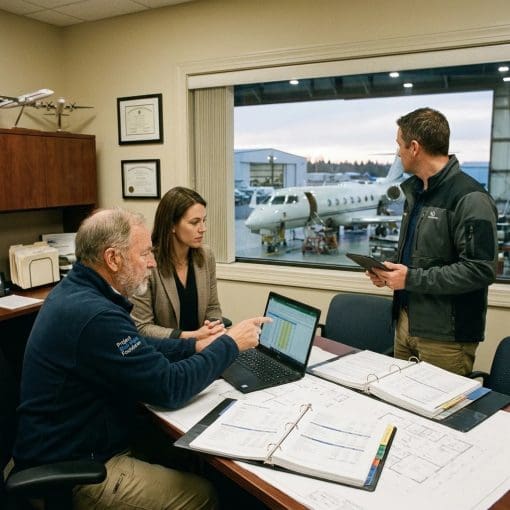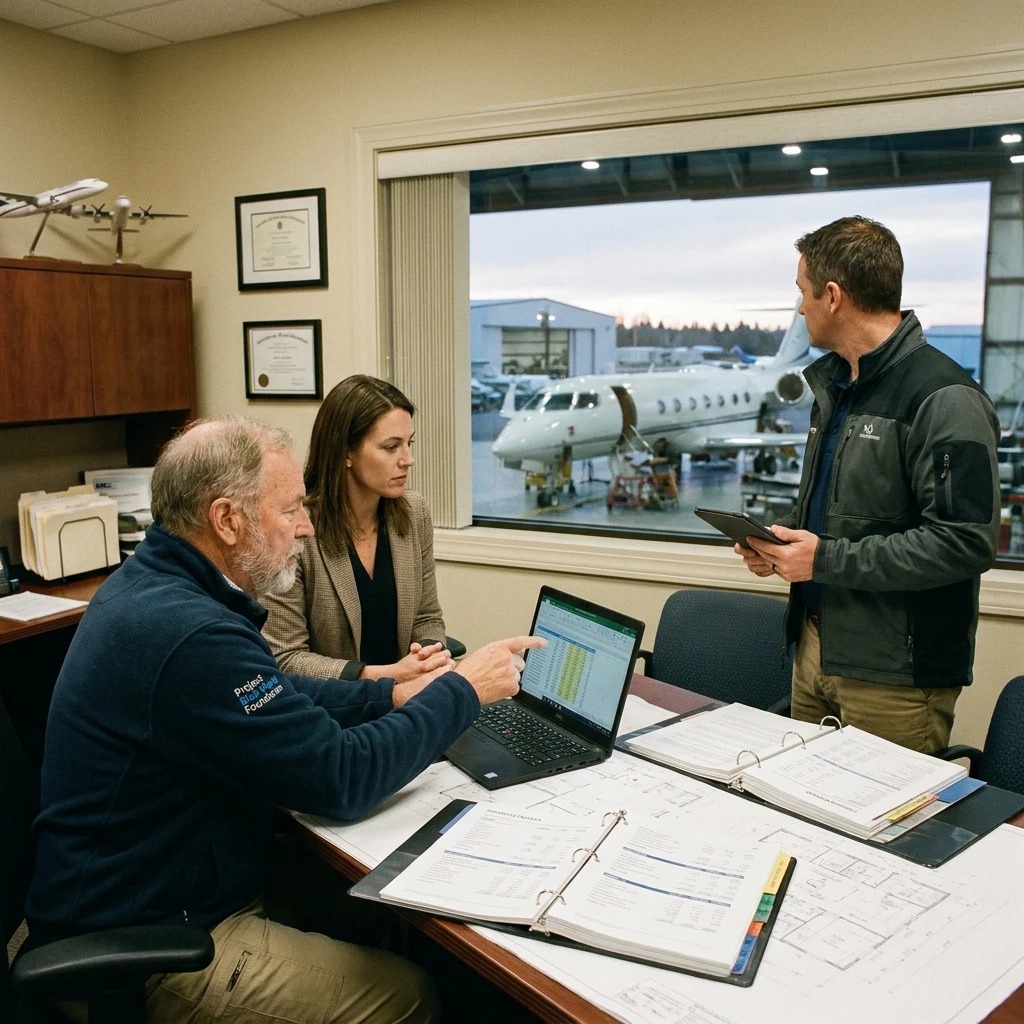

A clear, practical look at the role, the real work behind the title, and how to know when you need one.
Introduction
A pm manager in an aerospace program sits at the point where engineering reality meets schedule, budget, suppliers, and safety expectations. When that role is missing or underpowered, even good teams end up stuck: requirements drift, parts arrive late, testing queues pile up, and decisions get made too slowly or with the wrong inputs.
This matters more right now because aerospace and aviation projects rarely live in one place, under one contract, or with one set of stakeholders. Many initiatives also carry a public benefit component, whether that is workforce development, sustainability targets, community outcomes, or donor and sponsor reporting. The coordination load has grown, even when headcount has not.
In this article, you will get a grounded view of what this role actually does day to day, how it differs from adjacent roles, what “good” looks like in aerospace programs, and a simple way to decide whether you need internal leadership, outside support, or a hybrid model.
TL;DR: PM Manager in Aerospace Programs
-
Aerospace programs fail less from “bad engineering” and more from unmanaged interfaces: teams, suppliers, approvals, test assets, and changing requirements.
-
Leaders, sponsors, and public sector partners need predictable delivery, credible reporting, and fewer surprises at gates and reviews.
-
People often confuse this role with a scheduler, an admin, or a generic project manager who is not equipped for certification, configuration control, or multi supplier realities.
-
A better lens is “decision hygiene”: keeping scope, risk, cost, and compliance aligned as the program evolves.
-
Next steps: map your interfaces, define governance, set a risk cadence, and confirm who owns configuration and change control before the next milestone.
What Is a pm manager in Aerospace Programs?
A pm manager is the person accountable for organizing how a program gets delivered, not by doing everyone’s work, but by building the system that makes everyone’s work land on time and in the right order. In aerospace, that system has to handle long lead items, strict documentation, test dependencies, quality controls, and the reality that suppliers can make or break your schedule.
At a practical level, the role ties together technical teams, finance, procurement, quality, and stakeholders into a single plan. That includes managing the “truth” of the program: what is in scope, what changed, what risks are active, what decisions are pending, and what the next gate requires.
Why a pm manager Matters in Aerospace Programs
Aerospace programs are interface heavy. A design change can trigger rework in manufacturing, new test evidence, updates to manuals, and contract amendments. Without a strong coordination layer, small changes behave like dominoes, and you only see the damage when a milestone slips.
For business leaders and social impact organizations working in aviation and aerospace, the stakes are not only commercial. You might have sponsor commitments, public reporting expectations, or community partners counting on delivery dates. A well run program protects trust by making progress visible and decisions traceable, even when the plan needs to adapt.
The PM Manager’s Core Responsibilities (In Plain Language)
Think of the role like a conductor who cannot play every instrument but can hear when the brass section is drifting off tempo. In aerospace, the “tempo” is set by gates, test windows, supplier lead times, and certification evidence.
Here is what that looks like in real work:
-
Planning and integration: building an integrated master schedule that reflects engineering, procurement, manufacturing, and verification work, not just a list of tasks.
-
Scope and change control: keeping requirements, configuration, and change requests tied to cost, schedule, and approval paths.
-
Risk and issue management: running a cadence where risks are written clearly, owned, mitigated, and revisited, not parked in a spreadsheet.
-
Stakeholder governance: setting up decision forums, steering updates, and escalation routes so problems move toward resolution.
-
Supplier and partner coordination: tracking deliverables, clarifying interfaces, and making sure external teams are aligned to program priorities.
Takeaway: the job is less about “status updates” and more about preventing ambiguity from turning into rework.
Where Aerospace Makes the Role Different
A general project manager can run a website launch and do a fine job. Aerospace adds constraints that change the skill mix.
First, there is configuration management. When you build hardware and safety critical systems, “which version” is never a minor question. A solid pm manager works closely with engineering and quality to make sure the program can prove what was built, what was tested, and what evidence supports release.
Second, there are gate reviews and compliance expectations that shape how you document decisions. Whether you are dealing with internal quality systems, customer audits, or regulator facing evidence, programs need disciplined records and clear ownership.
Around the middle of winter in Winnipeg, when the wind off the Red River makes you question your life choices, people still show up because the work is organized and the next step is clear. That is the feeling a good program system creates: momentum even when conditions are not ideal.
Takeaway: aerospace delivery is a documentation and decision system as much as it is an engineering effort.
What Great Looks Like: Signals You Can Actually Observe
You do not need to guess whether the role is working. Look for observable outputs.
A strong pm manager will produce:
-
A schedule that matches reality, including long lead procurement, test assets, and approval timelines.
-
A short list of program risks that leadership can act on, with owners and due dates.
-
Decision logs that show what was decided, by whom, and what changed afterward.
-
Clean handoffs between teams, especially from design to manufacturing and from build to test.
You will also feel it in meetings. People come prepared, decisions get made, and you do not waste time relitigating the last conversation.
Takeaway: the role is proven by fewer loops and clearer decisions, not by more meetings.
How Project Blue World Fits Into This Picture (Without the Hype)
Some aerospace and aviation organizations need a full time internal leader. Others need short, sharp support: stabilizing a slipping program, setting governance, or creating a delivery model that works across countries and partners.
Project Blue World operates as a consulting led nonprofit that delivers complex initiatives through professional project management and strategic consulting, while using consulting revenue to fund social projects. That model can be useful when a program has both commercial and community outcomes and needs consistent reporting across stakeholders. Their global network, including regional agents and certified project managers, can also help when delivery spans multiple jurisdictions and specialized suppliers.
Takeaway: the best support model is the one that reduces delivery risk while fitting your real constraints, including capacity and geography.
How to Apply This
Use this quick framework before your next milestone or funding checkpoint:
-
Map your interfaces: list every team, supplier, and approval body that can block progress. If you have more than 10, you need tighter integration.
-
Define the “truth sources”: decide where scope, requirements, configuration, schedule, and costs live, and who can change them.
-
Set a risk cadence: weekly for active build and test phases, biweekly for earlier phases. Keep the list short and owned.
-
Create a decision path: who decides what, by when, and what happens if the decision is late.
-
Pick your resourcing model: internal, external, or hybrid. Base it on complexity and urgency, not job titles.
If you do only one thing, make change control real: no change without impact and approval.
Frequently Asked Questions
What is the difference between a PM and a program manager in aerospace?
Project managers usually run a defined project with a clear start and finish. Program managers coordinate multiple projects and workstreams that roll up to a larger outcome. In aerospace, that often includes shared test assets, shared suppliers, and shared certification evidence.
Does a pm manager need an engineering background?
Not always. They do need enough technical fluency to ask good questions, understand dependencies, and spot risk. Strong partnerships with engineering leads and quality are non negotiable.
When should we bring in outside project management support?
When the schedule is already slipping, when stakeholders demand better reporting, or when your team lacks capacity to build governance and run execution at the same time. External support can also help reset a program without internal politics.
How do you measure performance in this role?
Look at schedule predictability, change throughput (how fast changes are assessed and decided), risk retirement rate, and how often work gets re done due to unclear requirements or late decisions.
Can this role help with sponsor, donor, or government reporting?
Yes, if reporting is designed into the delivery system: clear milestones, traceable decisions, and measurable outputs. That is often where structured project management pays for itself.
Jet fuel, checklists, and Key Takeaways
-
A pm manager integrates people, plans, suppliers, and decisions into one execution system.
-
Aerospace makes the role more demanding because configuration, testing, and evidence trails are part of delivery.
-
You can spot “good” through clean handoffs, decision logs, and risks that actually get retired.
-
Hybrid support models often work best for global programs with limited internal capacity.
-
If meetings keep repeating, governance is missing, not effort.
Aerospace programs succeed when the work is organized in a way that matches the real world, including procurement, test windows, and approvals. The point is not to add process for its own sake. The point is to make progress predictable and decisions defensible. If your initiative includes public outcomes or sponsor commitments, that predictability becomes part of your reputation. Start by mapping interfaces and tightening change control, then choose the leadership model that fits your scope. Also, if you ever find a single orphaned zip tie on a hangar floor, treat it like a clue: small things often reveal whether a system is being managed.
Call to action
If you need an independent delivery partner or want to explore structured program support for an aerospace initiative, contact Project Blue World through their contact page.